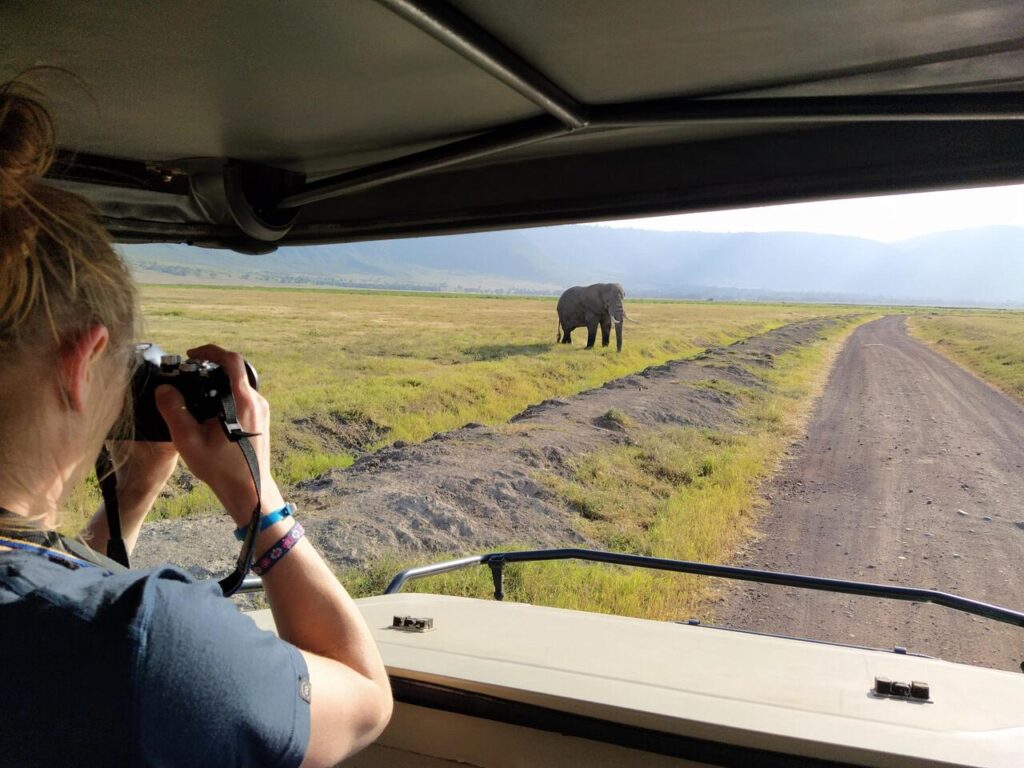
In Tarangire National Park, the seasons shape the entire safari experience. During the dry months, the park becomes a vital refuge as thousands of animals gather around the Tarangire River, the only permanent water source in the area, making wildlife movements highly predictable. When the rains arrive, animals spread out across the landscape, and the park transforms into a lush, green wilderness.
Dry Season (June to October) – Peak Wildlife Viewing:
This is the best time for a Tarangire safari. As water sources shrink, large concentrations of wildlife gather along the Tarangire River and permanent swamps. Expect exceptional sightings of African bush elephants, tree-climbing lions, buffalo herds, zebra, and wildebeest. Predator activity increases as prey becomes easier to track, making this prime season for action photography and classic golden savannah scenes. Clear skies, thinner vegetation, and predictable wildlife movements make it ideal for game drives.
Wet Season (November to May) – Green Season & Birding Paradise:
The rains transform Tarangire into a lush, emerald landscape with dramatic skies and fewer crowds. This is the best time for birdwatching, as migratory species arrive and resident birds display vibrant breeding plumage. Calving season attracts predators, creating unique wildlife photography opportunities. Landscapes are rich and scenic, perfect for travelers seeking a quieter, more immersive safari experience.
March to April (Peak Rains Consideration):
Heavy rains can make some remote tracks difficult to access, and road conditions may be muddy. However, this period offers outstanding photographic light, dramatic cloud formations, and striking contrasts across the baobab-dotted plains.
For a full seasonal breakdown and safari planning tips, see our Best Time to Visit Tanzania guide.