
Planning a combined Kenya and Tanzania safari is the smartest choice for travelers who refuse to compromise on their African bucket list. By visiting these two iconic safari destinations, one is sure to experience the best of East African wildlife safari tours
While many guides give a simple answer to when to go, few explain why certain months work better than others, how wildlife movements differ between Kenya and Tanzania, or which season truly matches your travel style. Our expert guide breaks down the best time of year for a combined Kenya and Tanzania safari using ecological patterns, migration logic, and real safari-planning insights from locals.
Understanding Kenya & Tanzania Safari Seasons
Kenya and Tanzania are East African countries along the equator and share similar climates, but their wildlife safari experiences vary significantly throughout the year due to rainfall patterns and the movement of wildlife, especially the Great Wildebeest Migration. Knowing how these seasons interact is key to choosing the best months to visit Kenya and Tanzania for safari.
Broadly, safari seasons fall into dry periods, transitional “shoulder” months, and greener “rainy” low seasons. None are inherently bad; they simply deliver different experiences in terms of wildlife density, scenery, crowd levels, and cost. This is why understanding Tanzania and Kenya safari seasons matters more than simply choosing peak months.
Here’s a month to month breakdown to help you choose the best time for your Kenya & Tanzania safari tour
January to February: Calving Season and Photography Tanzania & Kenya Safari
Not all iconic safari moments happen during peak season. January and February mark the calving period in southern Serengeti, making this an underrated but highly rewarding Kenya Tanzania safari best time for wildlife viewing, particularly for experienced travelers and photographers.
During these months, thousands of wildebeest calves are born within a short window, attracting predators in large numbers. This results in constant wildlife interaction, dramatic hunting scenes, and excellent opportunities for photography under clear skies and softer light conditions.
While the Masai Mara is quieter at this time, the overall experience remains strong for travelers prioritizing behavior, photography, and fewer crowds over sheer volume of animals.
March to May: Rainy Season and Budget-Friendly Kenya & Tanzania Safari
The green ‘rainy’ season safari in Kenya and Tanzania, typically from March to May, coincides with longer rains, especially in April. While often misunderstood, this period can be one of the most rewarding for travelers seeking value and atmosphere rather than peak density.
Landscapes turn lush, skies become dramatic, and birdlife flourishes. Safari prices drop significantly, making this the best season for Kenya & Tanzania combined safari for travelers on a tighter budget. Wildlife is still present year-round, though animals are more dispersed and some remote tracks may be challenging after heavy rain.
For many travelers, March represents the ideal balance i.e. fewer crowds, better rates, and manageable weather conditions.
June to October: Peak Months for a Kenya & Tanzania Safari
For most travelers, especially first-time visitors, the period from June to October delivers the most consistently rewarding experience and is widely regarded as the best time of year for a combined Kenya and Tanzania safari.
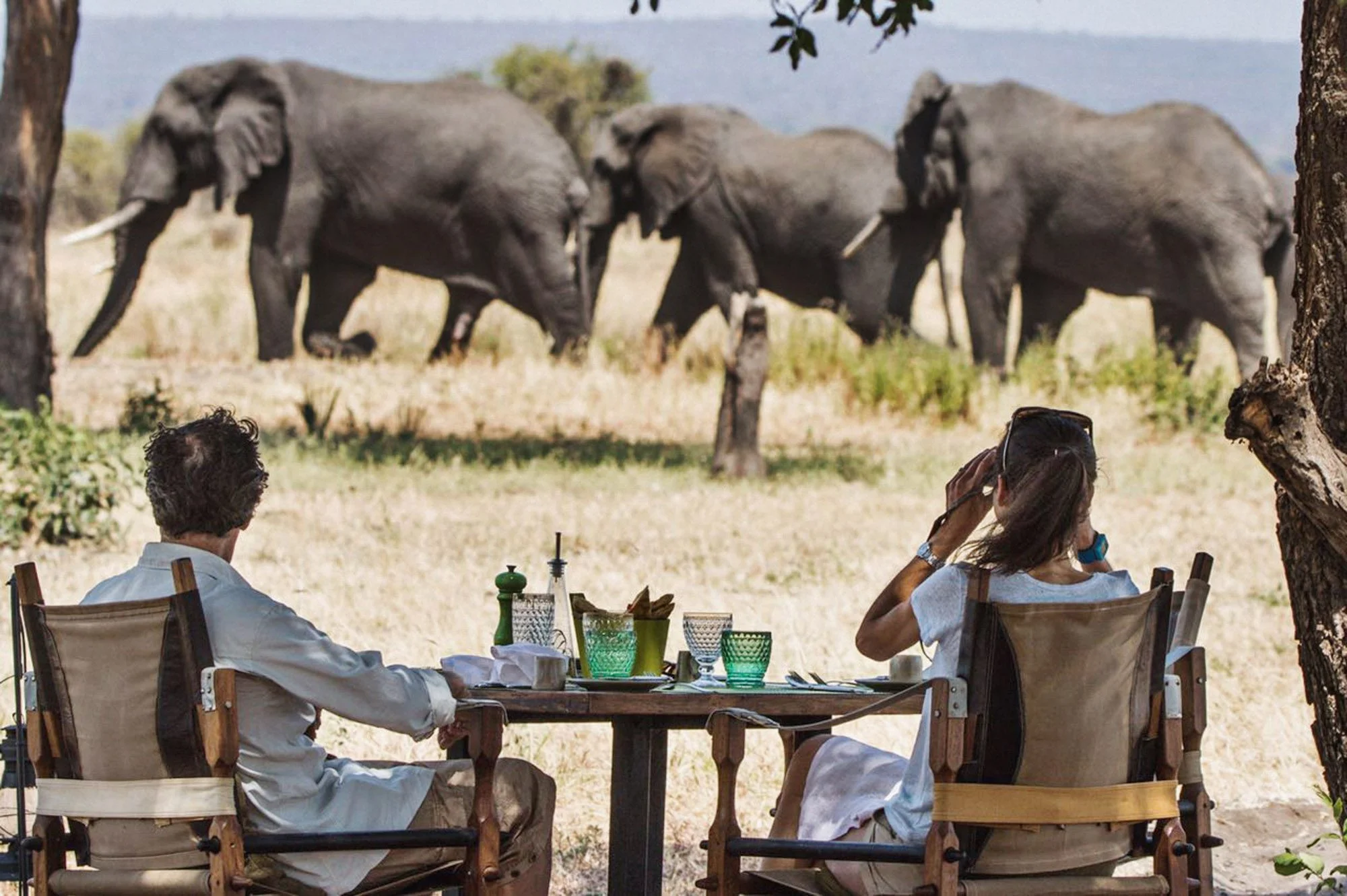
During these months, rainfall is minimal, vegetation is shorter, and animals naturally concentrate around rivers and water sources. This creates ideal conditions for wildlife viewing across both countries, from elephant herds in northern Tanzania to big cat sightings in Kenya’s flagship reserves. Road conditions are also at their best, allowing access to remote areas without logistical challenges.
This is the season that defines the classic East Africa safari best time narrative due to reliable sightings, comfortable weather, and high success rates for photography and game viewing. However, it’s also the busiest period, and travelers should expect higher prices and the need for advance planning.
July to September: Best Time to see the Great Migration in Tanzania & Kenya
For travelers whose primary goal is the Great Wildebeest Migration, timing becomes even more specific. The window between July and September is considered the best time to see the Great Migration in Kenya and Tanzania, particularly for those wanting to experience both countries in one journey.
At this time, vast herds move through the northern Serengeti before crossing into Kenya’s Masai Mara, following rainfall patterns and fresh grazing. This period offers the dramatic river crossings that have made the migration world-famous, along with intense predator activity along the riverbanks.
Because wildlife is actively moving between the two countries, this is also the best time for Masai Mara and Serengeti safari combinations, offering continuity rather than repetition. It’s a prime example of why a combined itinerary outperforms a single-country safari during migration season.
November to Early December: The Shoulder Season (Tanzania and Kenya Safari)
Short rains arrive around November, but they are usually brief and predictable. This period is often overlooked, yet it offers excellent wildlife viewing, greener landscapes, and noticeably lower rates compared to peak months.
For travelers looking for strong sightings without peak-season pressure, this is one of the most underrated answers to the question: when is the best time to visit Kenya and Tanzania together?
Wildlife remains active, crowds thin out, and the overall pace of safari feels more relaxed in November to December
Choosing the Best Time For Tanzania & Kenya Safari Based on Your Safari Style
Rather than asking for a single perfect month, it’s more useful to align timing with your priorities. The best time to go on a Kenya and Tanzania safari depends on whether your focus is witnessing the great migration, wildlife and bird photography, budget or avoiding crowds.
Migration-focused travelers benefit most from July to September. Photographers and repeat visitors often prefer January and February. Budget-conscious travelers find excellent value during the green season, while those seeking balance gravitate toward November or early December.
This intent-driven approach is what our experts at African Delight Safari focus on as it separates generic advice from truly effective safari planning.
Timing Your Tanzania & Kenya Safari the Smart Way
The best time for Kenya & Tanzania combined safari is not a one-size-fits-all answer. Wildlife is present year-round, but the experience changes with the seasons; sometimes subtly, sometimes dramatically.
A thoughtfully planned Kenya and Tanzania combined safari leverages these seasonal shifts to deliver deeper wildlife encounters, better value, and a more meaningful journey. When timing is aligned with your goals, East Africa rewards you in every season.
FAQ: Best Time for a Kenya & Tanzania Combined Safari
1. What is the best month for a Kenya and Tanzania safari?
The dry season from July to October is the best time. This window offers the most reliable wildlife viewing, clear skies, and coincides with the Great Migration river crossings where thousands of wildebeest dramatically cross the Mara River as predators lie in wait, creating one of Africa’s most iconic safari spectacles.
2. When can I see the Great Migration in both countries?
To see the migration in both countries, visit between late July and September. During this time, the herds are moving through the Northern Serengeti (Tanzania) and the Masai Mara (Kenya), performing dramatic river crossings.
3. What is the “Green Season” and is it good for safaris?
The Green Season (April to May) is the rainy period. While some roads are muddy, it is the best time for low-cost luxury safaris, lush photography, and birdwatching. Most lodges offer significant discounts during these months.
4. When is the wildebeest calving season?
During the great migration, calving season occurs in January and February in the Southern Serengeti, Tanzania. While the migration isn’t in Kenya then, it is the best time to see predator-prey interactions as thousands of calves are born daily.
5. How does the weather affect a combined Kenya & Tanzania safari?
Dry Season (June–Oct): Best for wildlife; animals congregate at water holes.
Short Rains (Nov–Dec): Brief showers; great for scenery and fewer crowds.
Long Rains (April–May): Heavy rain; best for budget travelers and birders.
6. What is the best time for a safari and Zanzibar beach trip?
The ideal months are June to October and December to February. These periods provide dry weather for game drives in the Serengeti and perfect tropical conditions for things to do in Zanzibar
7. Is it better to start a combined safari in Kenya or Tanzania?
Starting in Kenya (Nairobi) and ending in Tanzania (Arusha/Zanzibar) is the most popular route. This allows you to follow the migration’s natural path if traveling between July and September.
8. Are there many mosquitoes during safari season?
Mosquitoes are most active during the wet seasons (April-May & November). During the peak dry season (July-October) mosquito activity is significantly lower, though malaria prophylaxis is still recommended year-round.
9. When is the best time for photography in East Africa?
June and November are the best months for photographers. June offers dust-free air and golden light, while November provides dramatic “stormy” skies and vibrant green landscapes without the heavy rain of April.
10. How many days are needed for a Kenya and Tanzania tour?
We recommend a minimum of 8 to 12 days. This allows for 3 days in the Masai Mara, a day for the border crossing, and 6 days across the Serengeti and Ngorongoro Crater.
11. What are the luggage restrictions for fly-in safaris?
Most planes for fly-in safaris have a strict 15kg (33lbs) limit, including hand luggage. You must use soft-sided duffel bags; hard-shell suitcases are not permitted in the small cargo pods.
12. Can I see the “Big Five” year-round?
Yes. Unlike the migration, the Big Five (Lion, Leopard, Elephant, Rhino, and Buffalo) are resident animals. They can be spotted in the Ngorongoro Crater and Masai Mara at any time of year.