
Why the Machame Route 6-Day vs 7-Days Decision Matters on Kilimanjaro
When planning your Mount Kilimanjaro climb, one big decision that has nothing to do with hiking skills or fitness comes up fast. It’s about time. Most climbers ask the same question: Is the 6 days Machame route enough or is the 7 days Machame route better?
That one extra day may sound small, but on Kilimanjaro it affects acclimatization, energy levels, summit success, and overall enjoyment. The difference between 6 and 7 days often decides whether the climb feels rushed or truly achievable.
As of 2026, data from thousands of climbers reveals a stark reality. While the Machame route (Whiskey Route) is world-renowned for its “climb high, sleep low” profile, the difference between a 6-day Machame and 7-day Machame itinerary isn’t just about an extra night in a tent. It is about the specific physiological adaptations required to survive above 5,000meters (16,400 feet.)
In this guide, we break down the success rates, the medical data, and why that one “extra” day at Karanga Camp is often the only thing standing between you and the summit of Uhuru Peak.
1. The Machame Route Success Rate Gap: Why “Fast” Often Means “Fail”
The most compelling argument for the 7 day vs 6 day Machame route itinerary is the statistical probability of reaching the top i.e. Uhuru Peak. If you’re flying halfway across the world, you want the best odds possible. The 7-day Machame route success rate is significantly higher than its shorter counterpart.
| Feature | Machame 6-Day route | Machame 7-Day route |
| Average Success Rate | ~70–75% | ~80–95% |
| The “Secret” Ingredient | Skips Karanga Camp | Includes Karanga Camp |
| Body Stress | High (Rapid Ascent) | Balanced (Gradual) |
| Who is it for? | Elite athletes, Experienced hikers | First-timers & Regular hikers |
The 20% gap in Machame route success rates exists because the 6-day version forces a “double-day” on Day 4. Instead of resting at Karanga, you trek from Barranco Camp through Karanga and straight up to the high base camp at Barafu. By the time you reach Barafu (4,673m), your body has had zero “horizontal rest” at altitude before the grueling midnight summit push.
2. Acclimatization: Why Karanga Camp Matters
To understand why the 7th day is vital, we have to look at altitude sickness on Kilimanjaro. The Machame route is famous for the “Climb High, Sleep Low” rule, specifically on Day 3 when you trek to Lava Tower (4,630m) but descend to sleep at Barranco camp (3,976m).
The “Karanga Camp Factor”
On a 6-day Machame trek, you leave Barranco camp, climb the Barranco Wall, and continue all the way to Barafu Camp. This is a massive physical exertion at an altitude where oxygen is roughly 50% of sea level.
On a 7-day Machame trek, you stop at Karanga Camp. This provides:
- Red Blood Cell Production: An extra 24 hours for your body to produce more hemoglobin to carry oxygen.
- Glycogen Recovery: You aren’t burning your last reserves before the summit night.
- Sleep Quality: Better oxygen saturation during the night at Karanga (3,995m) prepares your heart for the thin air at Barafu (4,673m).
Medical studies published in High Altitude Medicine & Biology indicate that climbers who spend an additional night between 3,500m and 4,500m show a significantly lower incidence of AMS (Acute Mountain Sickness) symptoms during the final summit push of the climb.
3. The “Summit Night” Reality on Kilimanjaro
Everything about climbing Kilimanjaro to the top changes at midnight.
Summit night isn’t just another hike, it’s like being asked to run a marathon at midnight, in –15°C temperatures, after four straight days of relentless uphill walking. Your body is depleted. Your mind is fragile. And every small advantage suddenly matters.
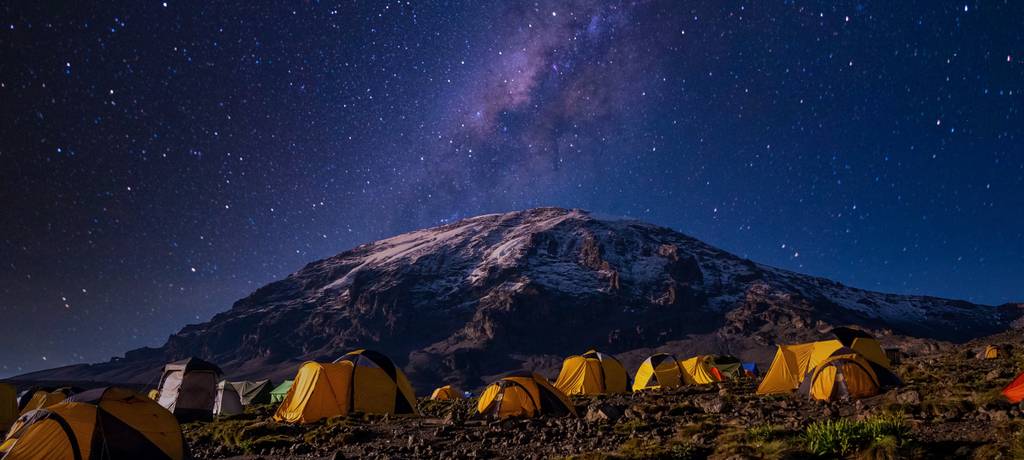
- The 6-Day Climber: Reaches Barafu Camp late in the afternoon, already running on empty. There’s barely time to eat, hydrate, and collapse into a sleeping bag. Sleep is shallow, restless (maybe 3-4 hours) before the guides shake them awake at midnight. It’s go time, whether the body is ready or not.
- The 7-Day Climber: Arrives at Barafu by early afternoon. There’s time for a real, carb-heavy lunch. Time to hydrate properly. Time for a deep 5-6 hour nap. Most importantly, there’s time to reset mentally; no rush, no panic, just calm preparation for the biggest push of the climb.
That extra “buffer zone” is the difference-maker. It’s why Machame route 7-day trekkers are far less likely to turn back at Stella Point as they’ve clearer minds and the resilience to keep moving when summit night gets brutal.
On Kilimanjaro, the mountain doesn’t reward speed. It rewards preparation.
4. Is the 6-Day Machame Route Ever the Right Choice?
We won’t lie, the 6-days Machame route is popular. Despite lower success rates, the 6 day option remains popular for a specific demographic. You should only consider it if:
- You are pre-acclimatized: You just spent a week before hiking Kilimanjaro by trekking above 3,500m eg. In Tanzania’s Mt. Meru or the Alps.
- You are an elite endurance athlete: Your body handles oxygen debt like a machine.
- You’ve done this before: You are a seasoned mountaineer who understands your body’s reaction to thin air meaning you know exactly how your body reacts above 5,000meters (16,400 feet.)
For everyone else flying in, especially travelers from sea level, the 6-day Machame route option often looks cheaper and faster but it comes with real risks. Saving the cost of one day is a loss if you spend your summit night in a rescue stretcher.
5. Machame Route Elevation Comparison (The Physiological Shift)
This side-by-side comparison shows where the climb truly changes. The key difference here is how your body handles the altitude as the days go on through out the various camping sites on Kilimanjaro’s Machame route
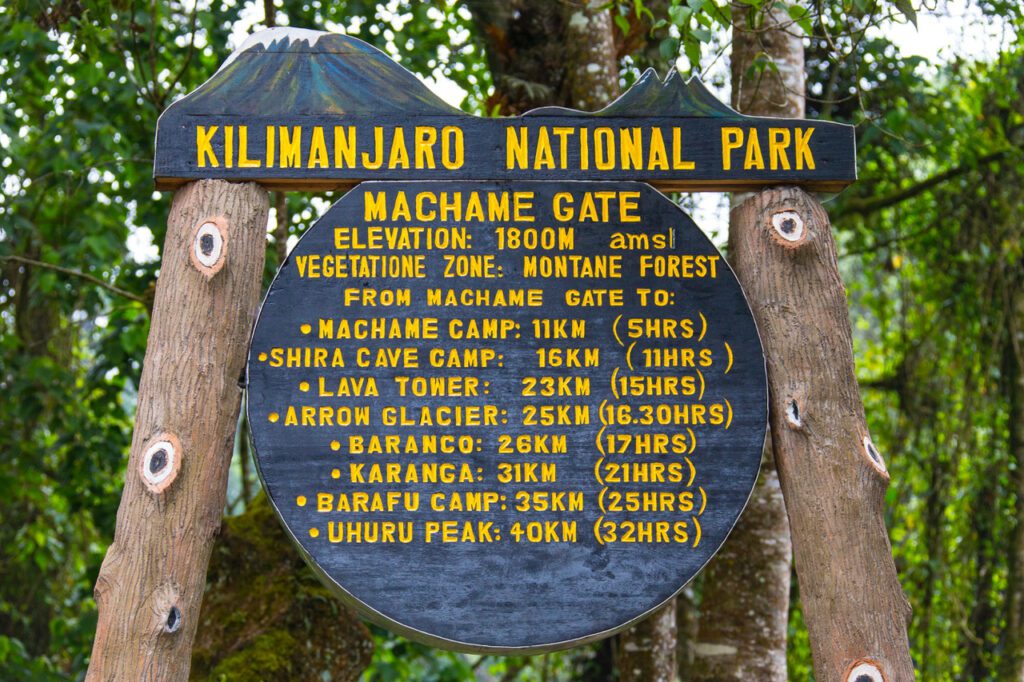
Pay close attention to Days 4 and 5. This is where the rhythm of the climb splits. While 6-day machame route trekkers are already pushing toward the summit on tired legs, 7-day machame route trekkers are stopping earlier, resting at Karanga, and giving their bodies time to adapt. To better understand why these differences matter, check out this guide on Mount Kilimanjaro hiking difficulty.
| Day | 6-Day Route (Camp & Elevation) | 7-Day Route (Camp & Elevation) | The “Why” It Matters |
| 1 | Machame Camp 9,875ft / 3,010m | Machame Camp 9,875ft / 3,010m | A lush introduction through the rainforest. |
| 2 | Shira Cave Camp 12,631ft / 3,850m | Shira Cave Camp 12,600ft / 3,840m | Emerging into the moorland; the air begins to thin. |
| 3 | Barranco Camp 12,960ft / 3,950m | Barranco Camp 13,044ft / 3,976m | Acclimatization Day: You hit Lava Tower (15,190ft) but sleep low. |
| 4 | Barafu Camp (High Camp) 15,091ft / 4,600m | Karanga Camp 13,106ft / 3,995m | The Split: 7-day trekkers stop to recover; 6-day trekkers push to High Camp. |
| 5 | Uhuru Peak & Mweka 19,341ft / 5,895m | Barafu Camp (High Camp) 15,331ft / 4,673m | 7-day trekkers move to High Camp well-rested for a midnight start. |
| 6 | Mweka Gate (Exit) 5,380ft / 1,640m | Uhuru Peak & Mweka 19,341ft / 5,895m | Summit Day for 7-day trekkers. Higher energy = Higher success. |
| 7 | — | Mweka Gate (Exit) 5,380ft / 1,640m | A slow, celebratory descent through the forest. |
That single extra day changes everything. Instead of reaching the base camp drained, 7-day climbers arrive better rested, better fueled, and mentally calmer. When summit night begins, they’re ready. On Kilimanjaro, success isn’t about moving faster. It’s about giving your body the time it needs to say yes to the altitude and carry you all the way to Uhuru Peak.
6. Expert Tips for Your Machame Route Ascent
No matter whether you choose the 6-day or 7-day Machame route, success comes down to one thing: how well your body adapts to altitude. These simple strategies help keep your oxygen levels in a safe range and greatly improve your chances of reaching the summit.
- The “Pole Pole” Mantra: Pole pole is Swahili for “slowly, slowly” and it’s the most important rule on Kilimanjaro. Even if you feel strong, walk at a pace where you can talk in full sentences. If you’re breathing hard and gasping for air by Day 2, your body won’t recover in time for summit day.
- Hydration: 3 – 4 Liters a Day: Oxygen travels through your body in your blood and blood is mostly water. The air on Kilimanjaro is extremely dry, so dehydration happens fast. Aim for 3 to 4 liters of water daily. Many climbers now use electrolyte tablets to replace salts and stay properly hydrated.
- Diamox (Acetazolamide): Talk to your doctor before your climb. Studies show that taking Diamox preventively can reduce symptoms of Acute Mountain Sickness (AMS), especially on the Machame route, which gains altitude quickly. It’s not a shortcut, but it can help your body adjust more smoothly.
Final Thoughts
Choosing between the 6-day and 7-day Machame Route comes down to how prepared you want to feel on summit night. Success on the Machame Route is driven by preparation. Beyond selecting the right itinerary, following a proper Kilimanjaro packing list and securing specialized Kilimanjaro travel insurance are essential for safety and comfort at high altitude
Mount Kilimanjaro is both a physical and mental challenge, and the extra acclimatization day on the 7-day Machame Route allows most climbers to rest, adapt to altitude, and approach summit night with greater confidence, significantly improving success rates.
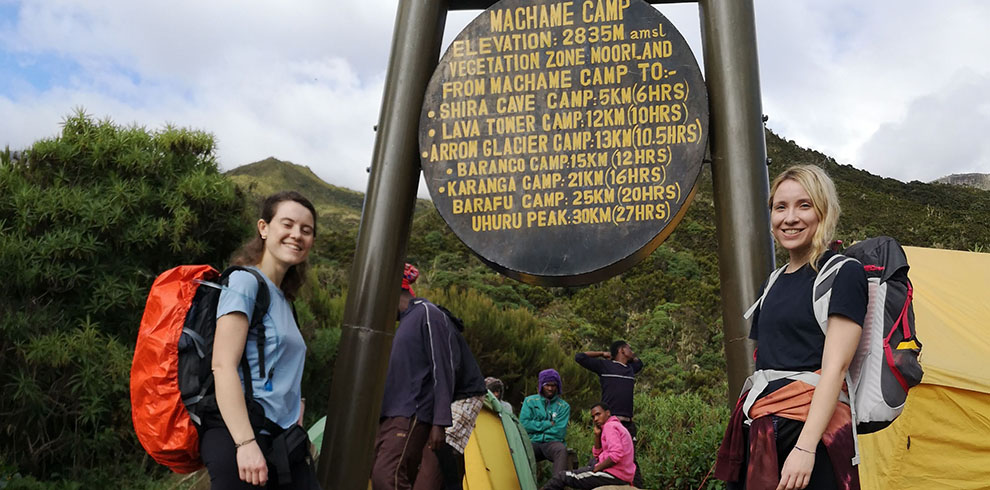
If you prefer added support, shared motivation, and experienced mountain leadership, joining organized Kilimanjaro climbing groups can make the climb more manageable and rewarding. Whichever option you choose, a steady pace, proper acclimatization, and listening to your body remain the foundation of a successful Kilimanjaro summit.