How to Conquer the “Kissing Rock” on the Machame Route
For many trekkers climbing Mount Kilimanjaro via the Machame Route, the ascent of the Barranco Wall is one of the most anticipated and misunderstood moments of the entire trek. Rising approximately 257 meters (843 feet) above the Barranco Valley, this iconic scramble is typically tackled on Day 4 and marks a clear transition from lush alpine scenery into Kilimanjaro’s high-altitude terrain.
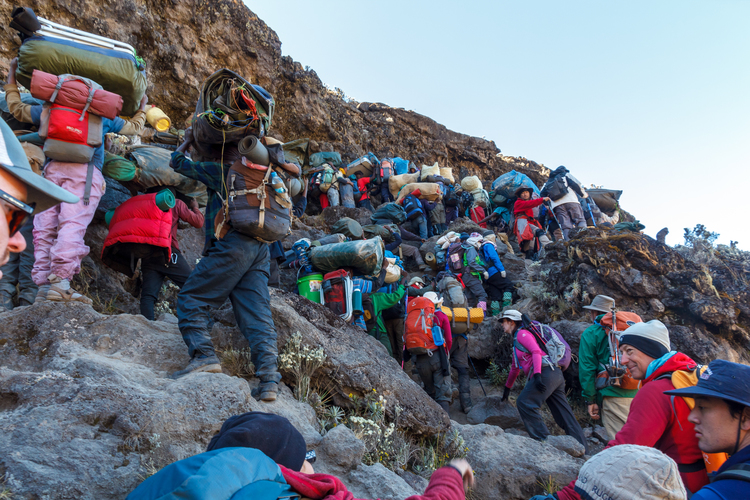
Often referred to as the “Breakfast Wall” because it is climbed shortly after leaving Barranco Camp, the Barranco Wall is not a technical rock climb. Instead, it is a controlled scramble that requires balance, patience, and proper guidance. As highlighted in our guide on why climbers choose the Machame Route to climb Kilimanjaro, this section is one of the defining highlights of the route and a major psychological milestone on the journey toward Uhuru Peak.
This guide breaks down exactly what to expect on the Barranco Wall, including the famous Kissing Rock, proven movement techniques, safety considerations, and how itinerary pacing influences success beyond this point.
1. Physicality vs Technicality: What the Barranco Wall Really Involves
The Barranco Wall frequently appears in discussions about Mt. Kilimanjaro hiking difficulty, especially among first-time climbers concerned about exposure and steep sections.
While the wall looks intimidating from below, it does not require ropes, harnesses, or climbing experience.
What to expect:
- Scrambling, not climbing: You’ll occasionally use your hands for balance, a technique known as four-point contact.
- No technical gear required: If you can climb a sturdy staircase or ladder, you can handle the Barranco Wall.
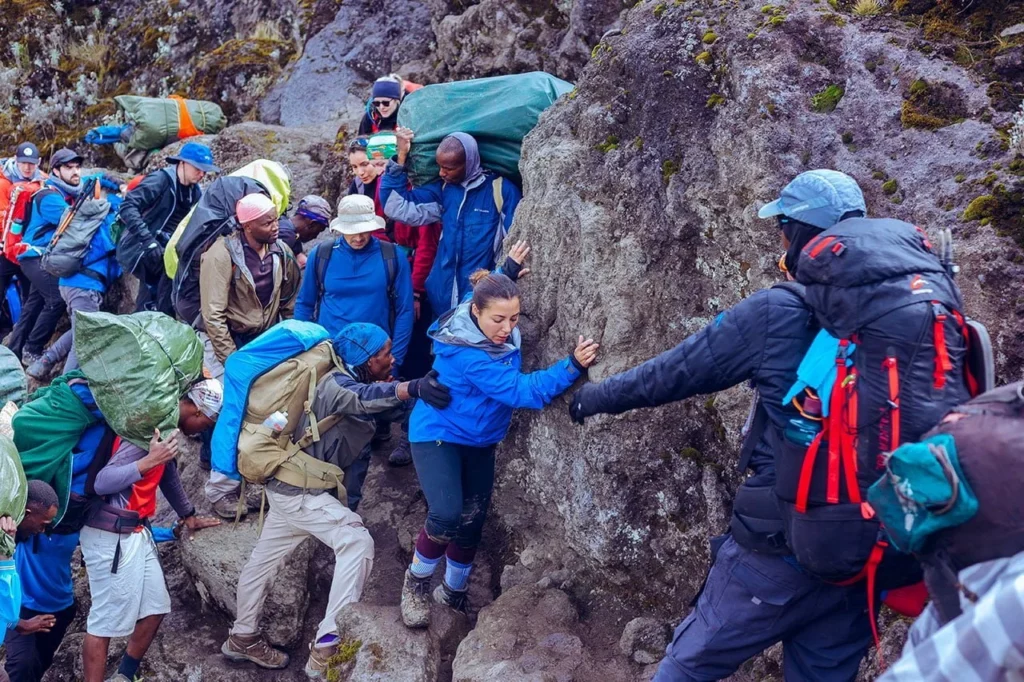
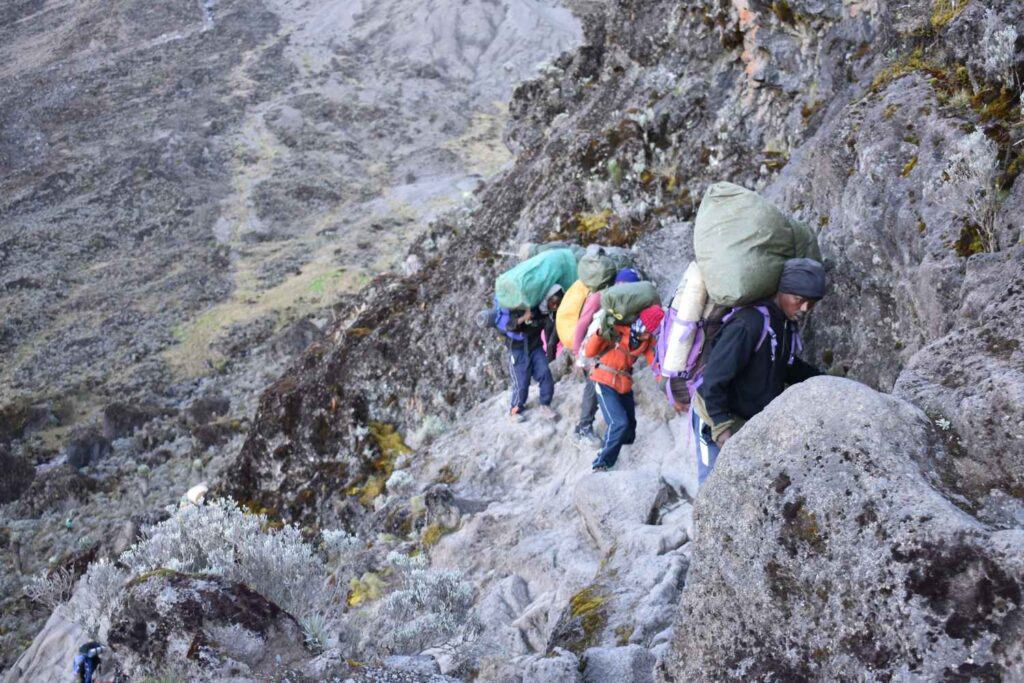
- Exposure awareness: Certain sections feel airy, with visible drop-offs. Guides manage spacing and movement carefully to ensure safety.
One of the most impressive sights here is watching the Kilimanjaro crew navigate the same terrain while carrying heavy loads with ease, an experience that builds confidence and respect for the mountain team supporting your climb.
2. Mastering the “Kissing Rock”
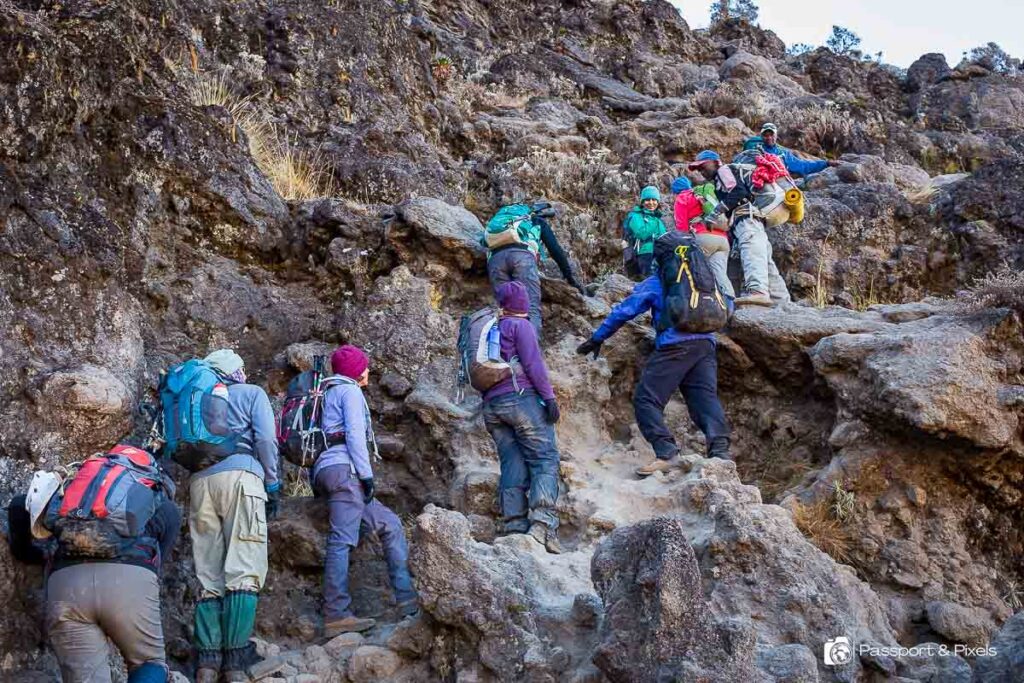
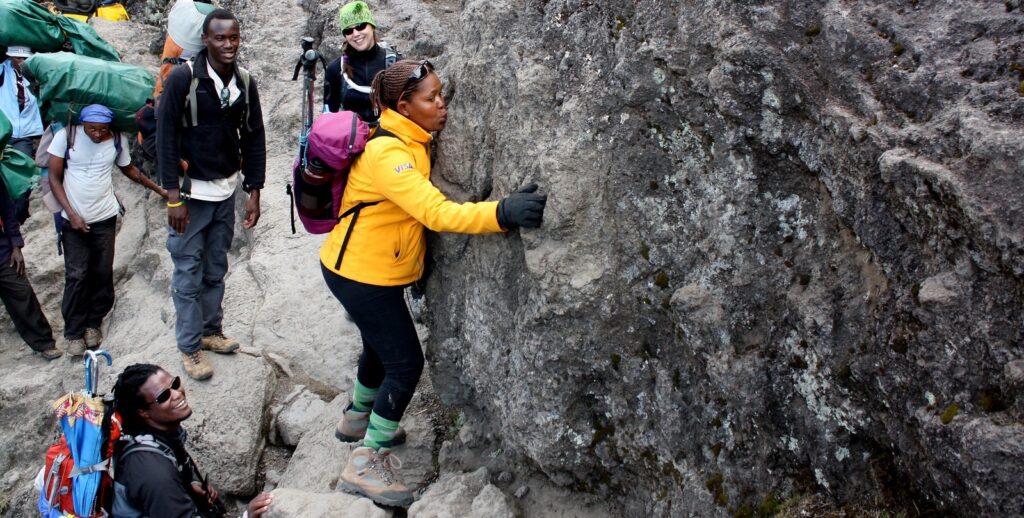
Roughly halfway up the Barranco Wall lies its most talked-about feature, locally know as ”Jiwe la Kubusu” which translates to the Kissing Rock. This narrow ledge requires a specific movement technique but is far less dangerous than it appears.
How to pass the Kissing Rock safely:
- Face the rock: Keep your chest close to the stone to maintain balance.
- Three points of contact: Always keep two feet and one hand (or vice versa) securely placed.
- Follow your guide: Guides often position themselves to assist or stabilize your pack during the maneuver.
This short section lasts only seconds, yet it often becomes one of the most memorable moments of the entire Machame Route.
3. Mental Strategy, “Pole Pole,” and Acclimatization
The Barranco Wall is as much a mental challenge as a physical one. Narrow paths can cause brief traffic slowdowns, making patience essential.
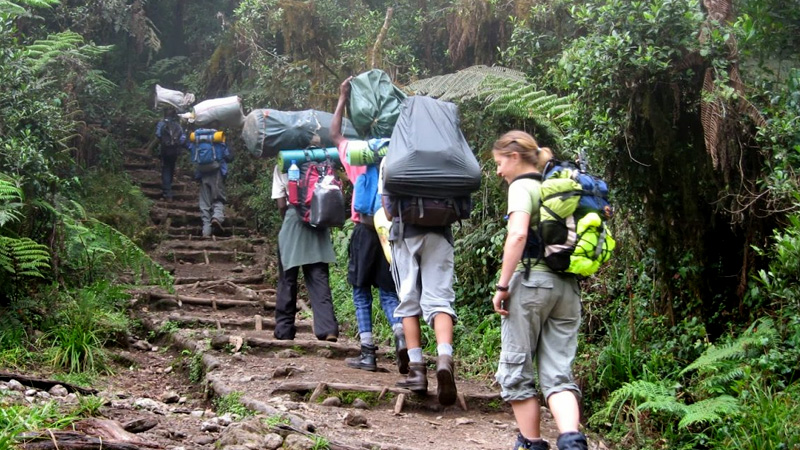
This is where the Swahili principle of “Pole Pole” (slowly, slowly) becomes critical. Rushing increases heart rate, accelerates fatigue, and can worsen early altitude symptoms, something climbers aim to avoid before reaching Karanga Valley.
This stage of the trek also highlights why itinerary pacing matters. When comparing shorter ascents to more gradual options like the Machame Route 7-day itinerary, the extra acclimatization day can significantly influence energy levels after the Barranco Wall and before summit night.
For a deeper understanding of altitude adaptation, see our detailed guide on altitude sickness on Kilimanjaro.
4. Essential Gear for the Barranco Wall
Your general Kilimanjaro packing list covers most needs, but two items are especially important for this morning scramble.
Key gear tips:
- Lightweight gloves with grip: The rock can be cold or damp, especially in the early morning.
- Stow trekking poles: Poles are excellent for long hiking days but should be secured to your pack so your hands are free during the scramble.
Proper gear preparation reduces stress and allows you to focus fully on safe movement.
5. Safety, Insurance, and Professional Support
The Barranco Wall is closely managed by trained guides, but Mount Kilimanjaro is still a high-altitude environment that demands respect. It is essential that your Kilimanjaro travel insurance covers trekking up to 6,000 meters or above 19,500 feet, including emergency evacuation and search-and-rescue operations.
This coverage ensures peace of mind for climbers and allows guides to act decisively if medical assistance is ever required.
Final Thoughts: The Reward at the Top of the Barranco Wall
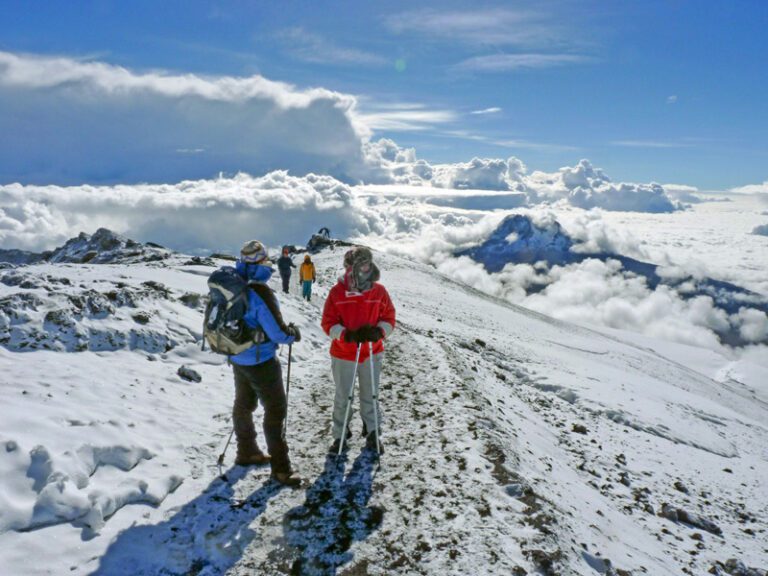
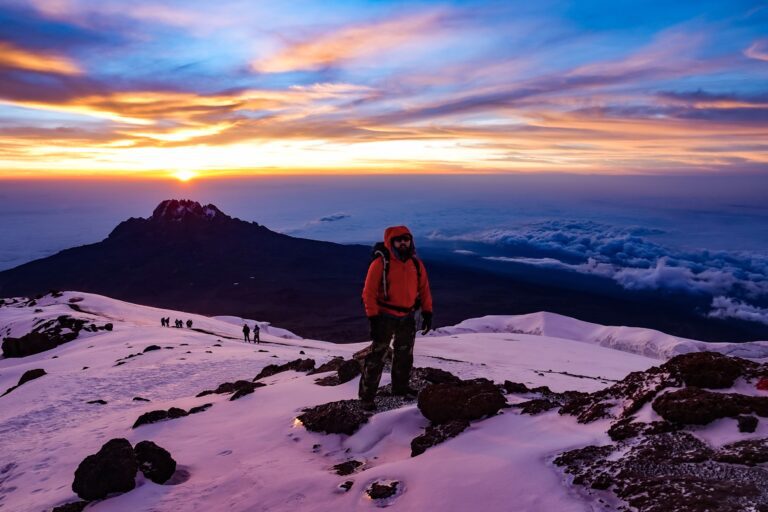
Reaching the ridge above the Barranco Wall, at roughly 4,200 meters (13,779 feet) is a major psychological victory. From here, climbers are rewarded with sweeping views of the Karanga Valley and a closer perspective of Kibo Peak, reinforcing the sense that the most technical section of the Machame Route is now behind them.
From this point onward, success depends on steady pacing, proper acclimatization, and mental resilience. If you’re planning ahead, explore our Kilimanjaro Climbing 2026 tours or consider joining one of our Kilimanjaro Hiking groups to take on this challenge with experienced guides and like-minded climbers.